-
Koszyk jest pusty
-
x

-
Koszyk jest pusty
-
x
-
-
-
Koszyk jest pusty
-
x
Do bezpłatnej dostawy brakuje -,--Darmowa dostawa!Suma 0,00 złCena uwzględnia rabaty -
- Kategorie
-
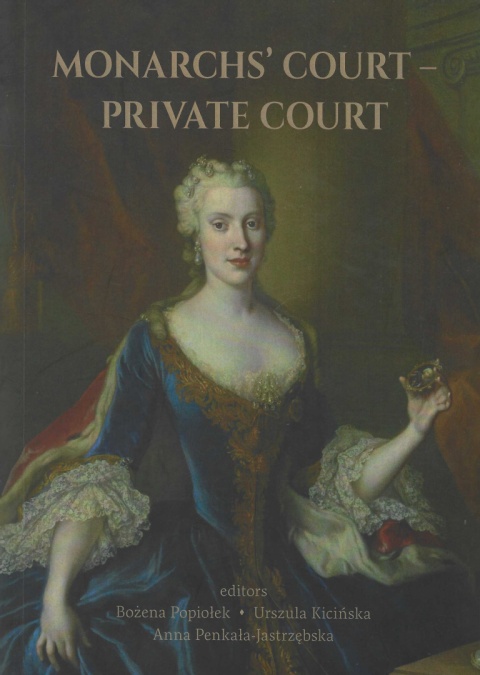
MONARCHS’ COURT – PRIVATE COURT. The Evolution of the Court Structure from the Middle Ages to the End of the 18th Century
| Wysyłka w ciągu | 24 godziny |
| Cena przesyłki | 11 |
| Dostępność |
Mała ilość
|
| Kod kreskowy | |
| ISBN | 9788380849723 |
| EAN | 9788380849723 |
| Zostaw telefon |
Redakcja: Bożena Popiołek, Urszula Kicińska, Anna Penkala-Jastrzębska
Rok wydania: 2024
Liczba stron: 282
Okładka: miękka ze skrzydełkami
Format: 16,5 cm x 23,5 cm
Uwaga! Książka w j. angielskim
Nieznaczne zarysowania na okładce
This monograph provides insights into European courtly circles from the perspective of structural and cultural changes that took place both in the reigning monarch’s courts and in private circles from the Middle Ages to the end of the 18th century. Regardless of the patron or patroness, the court was undoubtedly an interesting administrative, economic, and cultural structure, exerting a strong influence on the organization of European society in the pre-industrial era. The structure of the European ruling courts fluctuated constantly: their organization, their members, and the role they played changed. Not only was the court an important element of state administration and the administrator of offices, goods, and means, but also the creator of new cultural values and the environment where the youth was educated, where social advancement was possible, and where clerical and political careers flourished.
To a large extent, their size, members, and etiquette depended on the financial capabilities, as well as on the political structures of the countries in which they operated. With time and the development of new structures in the royal or aristocratic courts, which were the conveyor of elite values as well as new aesthetics and fashion, the court would become not only an element of authority, but also of prestige, as well as an expression of wealth belonging to a specific social group characterized by a coherent system of signs, gestures, and cultural codes, which constituted a community of educational models, and ceremonies.
(opis wydawcy)
Contents:
Introduction /7
Jerzy Rajman - Familiares in the times of King Władysław Jagiełło (1386-1434) /13
Piotr Birecki - Art as an important tool for shaping Albrecht Hohenzollern`s policy and court culture in Konigsberg, the capital of Ducal Prussia /25
Andrzej K. Kuropatnicki - The Household Below Stairs. The Structure of the Domus Providencie in Tudor times /41
Alexander Isacsson - Doing House and Making Dynasty: The Ducal Courts of Later Sixteenth-Century Sweden /59
Jarosław Dumanowski - Some kitchen secrets: Culinary creations and food fashionsat the Vasa court in the years 1631-1633 /79
Zbigniew Hundert - Household Guard of Jan III Sobieski, 1674-1696. Research overview /97
Jarosław Pietrzak - Was there a codified state ceremony in the Polish Lithuanian Commonwealth? Comments on the Marshal`s codes from the 18th century /113
Urszula Kicińska - Supplications as a source of the analysis of lives of petty servants at manorial estates in the eighteenth century /143
Bożena Popiołek - Women`s households. Accounting books and household notebooks as sources of knowledge on the activities of provincial female courts in the 18th century. Polish-Lithuanian Commonwealth /163
Agnieszka Laszczak-Słaby - Among stable staff at eighteenth century courts - their significance and role /187
Esther Griffin-van Orsouw - Building a Palace, Building an Identity: The Importance of Family Connections for Countess Ludwika Zamoyska nee Poniatowska /207
Karin Schrader - Patronage "en miniature": 18 th century portrait miniatures and snuff boxes as tokens of royal patronage and political propaganda /237
Anna Penkała-Jastrzębska - Fashion as a carrier of French court culture/ Analysis of the phenomenon based on inventories of bridal trousseaus from Saxon times /259
Dane producenta
UKEN
Podchorążych 2
30-084 Kraków
Poland
wydawnictwo@uken.krakow.pl